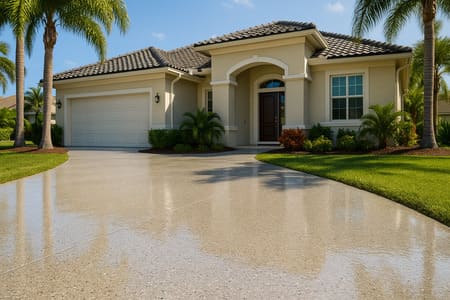
Why Sarasota Driveways Need More Than a Basic Sealer
Sarasota brings high UV exposure, salty coastal air, and frequent afternoon storms. Add in hot tires that roll onto the slab after a drive on U.S. 41 or I‑75, and you have a recipe for discoloration and peeling if the coating is not engineered for these stresses. Neighborhoods like Lakewood Ranch, Palmer Ranch, and Gulf Gate share the same reality. The right system must resist UV fade, shed rain, and hold tight when tires cool and contract on the surface.
- Intense sun can yellow thin or unprotected coatings and chalk bare concrete.
- Rain and humidity push moisture up through the slab, which can cause bubbles or delamination without proper prep.
- Hot tire pickup happens when warm rubber softens a weak topcoat and lifts it as the tire cools.
- Oil and fluids from cars can soak in and stain uncoated concrete quickly.
- Sand and shells tracked from Siesta Key act like sandpaper on fragile finishes.
What Types of Driveway Coatings Hold Up Best
Epoxy Flake System With Polyaspartic Topcoat
For most Sarasota driveways, an epoxy base paired with a polyaspartic topcoat is a strong all‑around performer. The 100 percent solids epoxy bonds hard to properly prepared concrete. The broadcast decorative flake helps hide minor imperfections and adds texture. A clear polyaspartic topcoat gives improved UV stability and fast return to service, so your driveway looks fresh and resists yellowing and hot tire pickup.
Quartz Broadcast System
Quartz systems build in heavy texture and colorfast aggregates. They are popular where traction is a priority, such as sloped driveways or homes near boat ramps. The gritty profile improves foot grip when rain hits and adds impact resistance for daily use.
High‑Performance Urethane or Polyaspartic Topcoats
Premium urethane and polyaspartic clear coats add UV protection and chemical resistance over colored epoxy or flake. These topcoats give an extra shield against oil stains and help coatings keep their color under Sarasota sunshine.
Silane or siloxane sealers repel water and reduce surface absorption. They are helpful for basic protection but do not add color, gloss, or meaningful abrasion resistance. If you want to significantly improve appearance and traction, choose a build‑coat system instead.
UV Fade, Traction, Oil Stains: How Each System Performs
Homeowners usually care about four things: how the finish handles sun, how it grips underfoot, how it shrugs off oil, and how it stands up to tires. Here is the simple version.
- UV fade: Polyaspartic topcoats resist yellowing better than standard epoxy alone, especially on sun‑drenched drives in The Meadows or Fruitville.
- Traction: Flake and quartz broadcasts add texture for safer footing during summer showers. Clear coats can be adjusted with a traction additive if needed.
- Oil stains: High‑solids epoxy with a quality topcoat resists motor oil and brake fluid. Wipe spills promptly with a mild cleaner.
- Tire traffic: Hybrid systems with epoxy base and polyaspartic top help prevent hot tire pickup on daily drivers and SUVs.
If you would like a deeper dive on UV and temperature, this article on UV and heat resistance explains why certain topcoats hold color longer in direct sun.
Maintenance That Protects Your Investment in Sarasota
Coated driveways are easy to live with. Keep sand and grit off the surface, wipe any fluids sooner rather than later, and avoid harsh chemicals that could dull the gloss. Routine rinses go a long way during summer when pollen and salt spray ride the breeze off the Gulf.
Simple care plan: Rinse with a garden hose and soft broom. Use a gentle pH‑neutral cleaner on marks. Place small mats where cars drip to catch the first drops, then toss them in the wash. This takes minutes and keeps the finish bright.
Avoid using aggressive degreasers on a regular basis. They are not needed for everyday cleaning and can reduce sheen over time. Gentle cleaners work and help the coating last.
How We Build Coatings That Last in Florida Weather
Longevity starts before any color goes down. Concrete in Sarasota often carries moisture, especially after heavy rain. Proper grinding or shot‑blasting creates the right profile for adhesion and clears away weak layers and contaminants. Where vapor is present, a professional moisture barrier protects the bond. If you want to understand the prep side, see how a moisture vapor barrier and surface prep stop bubbling and peeling before they start.
Once the slab is profiled and stable, a high‑solids epoxy base locks in. Full flake or quartz gives texture and hides small cracks. A UV‑resistant, chemical‑tough topcoat seals the system so rain beads up, oil wipes off, and tires do not snag the finish.
Sarasota’s summer pattern brings pop‑up storms most afternoons. Plan your project window to allow proper cure time and keep cars off the surface until it is ready. This simple timing step helps avoid tire marks while the coating hardens.
Best Uses and Local Scenarios Around Sarasota
Every driveway is different, but patterns emerge around town:
Lakewood Ranch and Palmer Ranch often choose full‑flake finishes for a clean, bright look that hides dust and road film. Siesta Key and Bird Key homes prefer quartz textures for a little extra grip after beach days. Downtown Sarasota properties like the sleek feel of a colored epoxy base with a clear topcoat that resists yellowing in wide‑open sun.
For shaded driveways under large oaks, traction is still important when leaves build up. A broadcast texture keeps footing steady. For wide drives where multiple cars park, a hybrid system with a polyaspartic top can reduce tire imprints and help keep the coating smooth.
Hot Tire Traffic: What Really Matters
After a run on the Tamiami Trail, tires heat up fast. When they cool on your driveway, they can pull at weak films. The fix is not thicker paint. It is better chemistry, better prep, and the right topcoat. Epoxy builds the base strength. Polyaspartic brings heat and UV tolerance. Together, they handle daily arrivals and departures without giving up adherence.
Hot tires are the real stress test for residential coatings. Ask for an epoxy base with a proven, UV‑stable top layer, plus a full broadcast texture so the coating grips the slab and the tires grip the surface.
Oil Stains and Florida Rains
We see two common issues on uncoated driveways in Sarasota. First, drip spots that soak in and spread, leaving dark halos. Second, water that sits after downpours. A film‑forming system solves both at once. Oil cannot sink in, and water sheets off or beads up. With a squeegee or broom, the driveway clears quickly, so you are not stepping through puddles to get the mail.
If an older slab already shows stains or small cracks, coatings still help. Flake and quartz systems disguise flaws well, and the sealed surface makes future cleanup easy. Many homeowners choose to refresh the entire drive to unify color and texture from curb to garage.
Safety and Traction You Can Feel
Wet mornings are normal near the Bay. Texture matters for safety. Flake and quartz broadcasts create fine peaks that help shoes grab the surface. If you want a smoother look but still need grip on a sloped drive, ask about a clear traction additive in the topcoat. It is almost invisible yet adds friction where you want it most.
Compared with plain sealers, broadcast systems keep their texture longer under rolling loads. That means fewer slick spots where you step out of the car with groceries or kids hop out after practice.
Color That Stays True Under Sarasota Sun
UV exposure breaks down low‑grade binders over time. That is why thin coatings fade fast in open driveways. A quality polyaspartic top resists UV much better than epoxy alone. If color stability is your top priority, lighter chip blends and quartz mixes also help, since dark colors absorb more heat.
For more background on how coatings respond to heat and sunlight, the comparison of materials in our polyurea vs epoxy article explains tradeoffs in simple terms.
Care Tips That Keep The Finish Looking New
Homeowners love that coated driveways are easy to maintain. Here is a simple rhythm that works for Sarasota living without turning you into a janitor.
- Weekly: quick rinse to float off grit and pollen, then sweep with a soft broom.
- As needed: spot clean marks with a mild, pH‑neutral cleaner.
- Seasonal: check downspouts so rain does not dump onto the same area, which helps prevent standing water patterns.
That is it. Keep it simple, and the coating will continue to shine. If life is busy, even every other week is fine. Consistency matters more than frequency.
Why Homeowners Choose Kwekel Epoxy Floors
Local experience matters. Our team understands Sarasota’s weather cycles and the way Gulf moisture affects concrete. We build systems that match your home’s exposure, slope, and vehicle use. You get a driveway that looks great and works hard, not one that needs a redo after the first summer. If you want to see what is included in our service, the details for driveway coatings outline the process and finish options.
Ready to Protect Your Driveway From Sun, Rain, and Tire Traffic?
Let Kwekel Epoxy Floors recommend the right system for your surface and schedule a convenient install. Speak with a friendly pro at 386-308-9488 and tell us about your driveway’s sun exposure and slope. If you prefer to read first, you can review textures, colors, and prep steps on our page about driveway coatings and then give us a call when you are ready.